
Tile Installation in Downey, CA
Straight lines, even grout joints and a surface that stays bonded. Tile is a craft, and it is where our crew’s work is easiest to see.
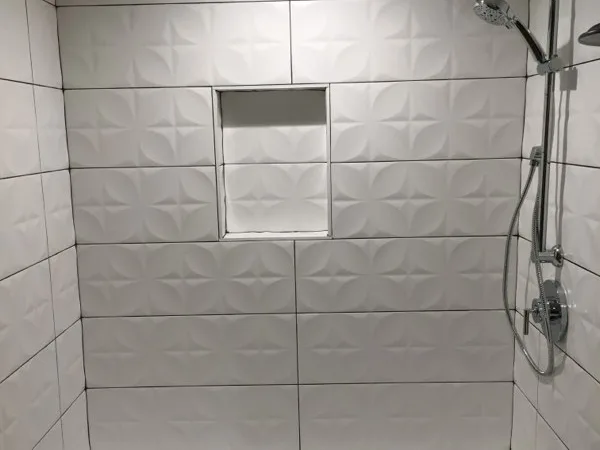
Tile is a craft that shows every shortcut
Tile installation is the setting of ceramic, porcelain, natural stone and mosaic tile on walls, floors, showers and backsplashes. Done well it is the most durable finish in a house. Done badly it shows immediately, in lines that wander, edges that do not meet, grout joints that vary and tiles that crack, because every flaw in the wall or floor underneath comes through to the surface.
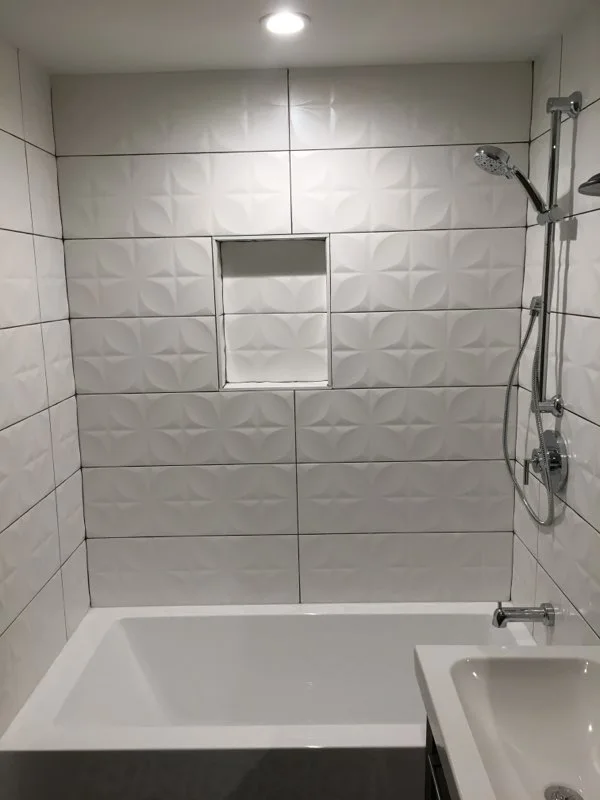
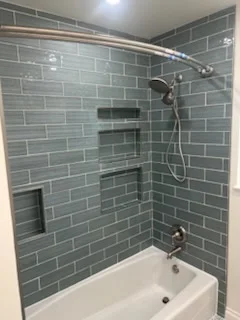
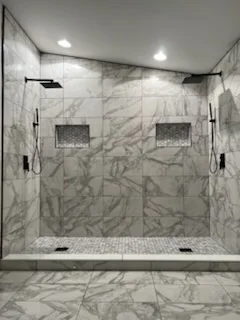
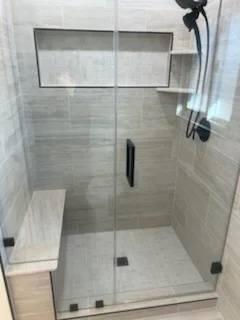
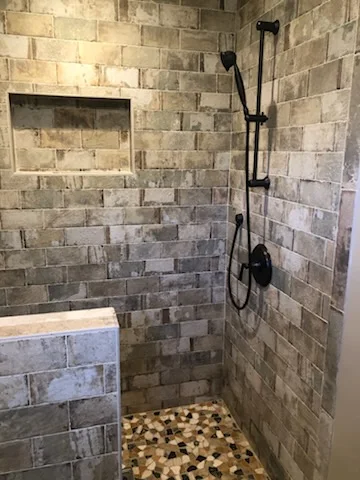
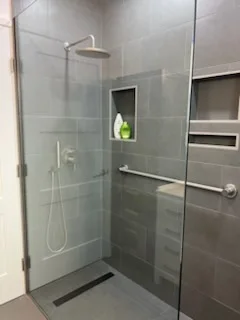
The photos on this page show what that discipline looks like: a white patterned tub surround with a recessed niche set on straight lines, large-format marble-look tile with a double-head walk-in shower, small-format pebble floors that follow the shower slope, and a brick-look porcelain that runs wall to niche without a visible seam. Each of these depends on a flat substrate, accurate layout and careful cuts around valves, niches and corners.
Large-format tile and mosaics have become the most requested types because they reduce grout lines and give a cleaner look, but they are also less forgiving. A large tile needs a flatter surface, a properly selected mortar and a setting technique that avoids lippage, the slight height difference between neighbors that catches a bare foot. Mosaics and pebble need patient setting and the right grout to stay tidy.
When tile needs replacing or a new install
- Grout that crumbles or stains permanently. Failed grout lets water through to the backer board. Regrouting helps early on, but widespread failure usually means re-tiling.
- Tiles that sound hollow or have lifted. A hollow sound when tapped means the tile has lost contact with the mortar. These tiles will crack or pop eventually.
- Cracks that follow a pattern. Cracks that run across several tiles in a line typically mean the surface below is moving and needs correcting before new tile goes on.
- A dated color or pattern. When the tile is solid but out of style and impossible to match, replacing it is often the only way to refresh the room.
- You are building a new shower or backsplash. New wet areas and kitchen backsplashes call for correct layout and waterproofing from the beginning.
How we install tile
Check the surface and plan the layout
We check how flat and solid the wall or floor is, pick the starting lines so the pattern falls evenly, and decide where cuts will be least visible.
Prepare the substrate
Backer board, waterproofing membranes, leveling and slope are done first. In a shower this includes the pan and a flood test where needed.
Set the tile
Mortar is combed onto the surface, tile is set with spacers on a snapped layout and checked frequently with a level and straightedge.
Cut and fit around details
Niches, valves, outlets, corners and edges are cut and fitted carefully, because these are where tile jobs look good or bad.
Grout, seal and clean
Once the setting mortar has cured, grout goes in and is cleaned off. Joints that need it are caulked, and natural stone or cement grout is sealed where applicable.
What affects the cost of tile installation
Tile pricing combines the material you buy and the labor each type demands:
Tile size and type
Large-format tile, mosaics, natural stone and intricate patterns like herringbone take longer to set than a standard square tile.
Surface preparation
Flattening a wall, repairing a subfloor or building up a shower pan adds work before tile starts.
Area and complexity
Square footage matters, but so do niches, benches, curbs, corners and edge trim that multiply the number of cuts.
Demolition
Removing old tile and mortar bed is labor-intensive and dusty, and it is often priced separately from the install.
Why homeowners choose us for tile
Tile and bathroom work are the strongest examples of what the crew builds, and the photos here are real projects shared by the company. Rigo’s background in hands-on trades means he cares about the substrate and the layout, not only the finished surface.
You can bring your own tile or choose with us. In either case we tell you how much to buy, including the extra needed for cuts, and flag any choices that will be difficult to install well.
Where we do this work
We install tile in Downey and nearby cities, including Norwalk, Paramount and South Gate. Many bathroom and kitchen tile projects in these neighborhoods replace original tile that has been in place since the house was built.
Tile work from our crew
Tub surrounds, walk-in showers and pebble floors, as built.
Tile Installation questions, answered
What is the difference between ceramic and porcelain tile?
Porcelain is denser, harder and less porous than ceramic, which makes it a good choice for showers, floors and outdoor use. Ceramic is typically lighter and easier to cut, and suits walls and low-traffic areas well.
Should I use epoxy or cement grout?
Cement grout is the standard, affordable and widely used, but needs sealing in some applications. Epoxy grout is more stain-resistant and does not need sealing, though it is harder to work with and costs more. We can recommend one for your project.
What is a tile niche and should I add one?
A niche is a recessed shelf built into the shower wall, set between studs, for shampoo and soap. It is cleaner than a hanging caddy, and it needs to be waterproofed and framed properly. Several of the showers in our photos include one.
How much extra tile should I order?
Typically about ten percent more than the measured area, and more for diagonal or herringbone patterns, to cover cuts and breakage. Keeping a few spare tiles is also useful for future repairs.
How soon can I use a newly tiled shower?
Mortar and grout need time to cure, usually a day or more before light use and longer before heavy water exposure. We tell you when it is safe to use based on the products we set the tile with.
Can you tile over existing tile?
In some cases, but it raises the surface and can hide problems underneath. We assess the existing tile and base and tell you whether tiling over it is a good idea or whether removing it is the better choice.
Often needed alongside tile installation
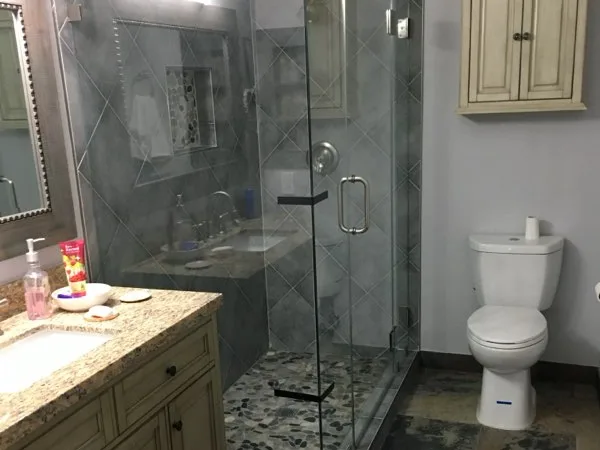
Bathroom Remodeling
Tile showers, new vanities and a bathroom that finally works for your family.
Learn more →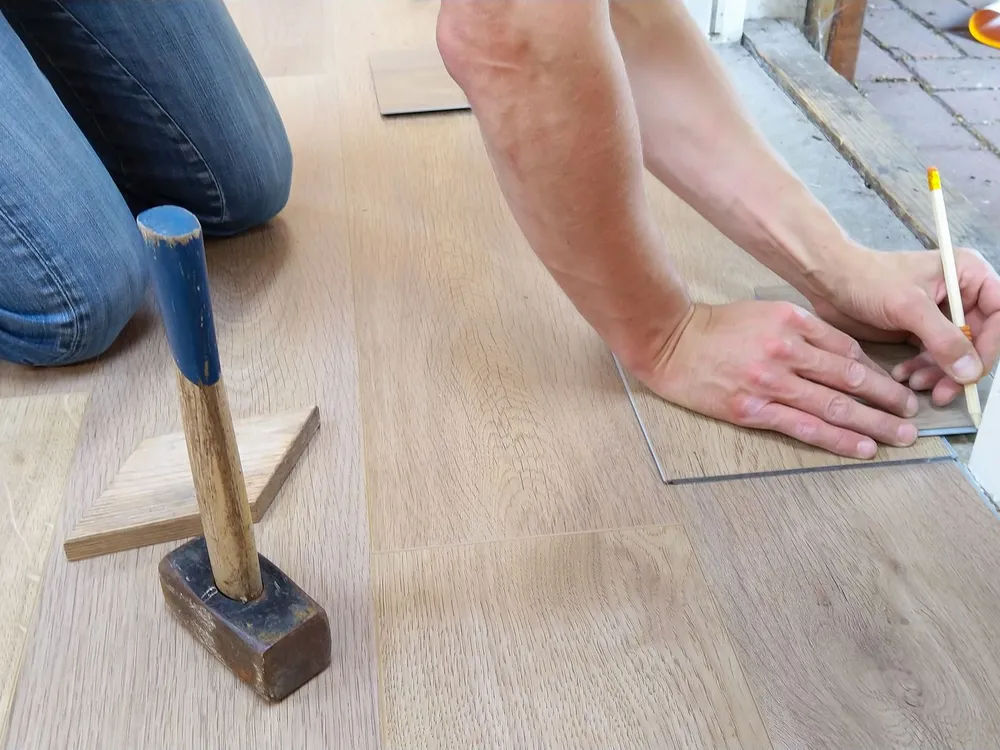
Flooring Installation
New floors laid over a properly prepared surface so they stay put.
Learn more →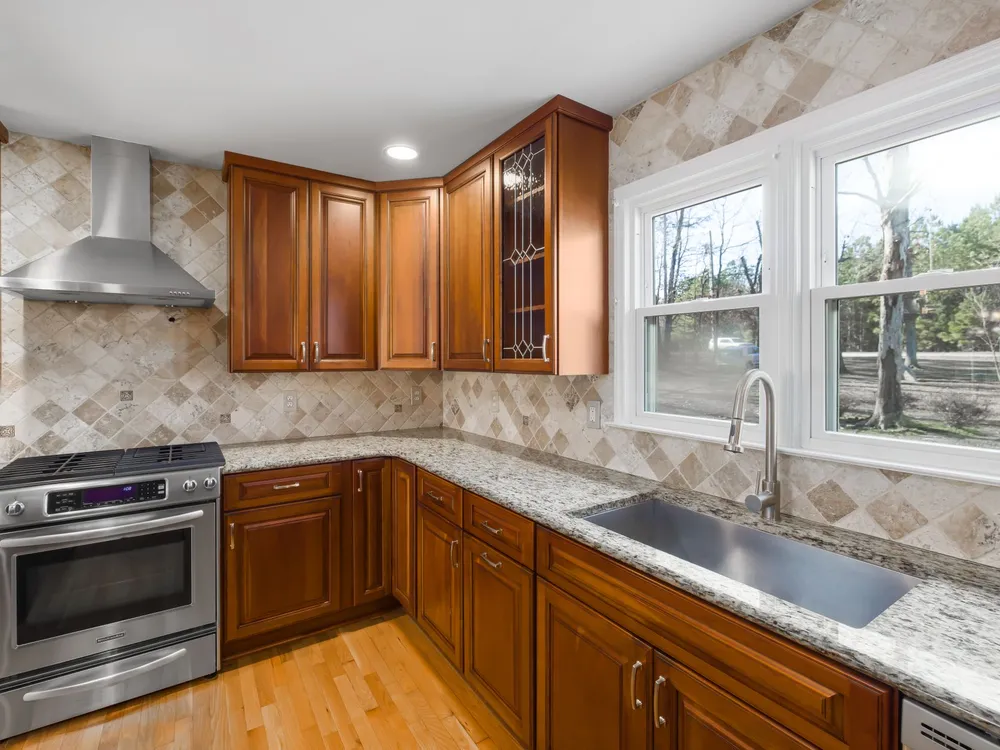
Kitchen Remodeling
New cabinets, counters, lighting and layout for the room the house runs on.
Learn more →
All Flooring & Tile
Floors and tile set flat, level and finished clean, from showers to whole floors.
Learn more →Planning a tile project?
Send us photos of the space and the tile you like. We will tell you what it takes to set it right and what it will cost.
¿Prefiere español? Llame al (714) 586-3088.